
Flaxseed powder and flaxseed oil come from the same seed, but they are not interchangeable products. Powder keeps the ground seed material and works naturally in foods such as porridge, yoghurt and roti dough. Oil is the extracted fat and is better treated as a finishing oil or used according to the bottle’s cosmetic directions. This Nepal-focused guide compares the two current Sara listings so buyers can choose the right format and pack without relying on exaggerated health claims.
Quick answer: which one should you buy?
- Choose roasted flaxseed powder when you want the ground seed as a recipe ingredient.
- Choose flaxseed oil when you want a measured finishing oil or a label-directed hair or skincare oil.
- Check the live size selector before paying because the current pack options do not all match older packaging photographs.
- Ask Sara separately for wholesale supply; retail catalogue prices are not wholesale quotations.
Flaxseed powder vs flaxseed oil at a glance
| Current Sara product | What the listing contains | Available packs and prices checked 17 November 2026 | Best suited to |
|---|---|---|---|
| Roasted Flaxseed Powder | Roasted, ground flaxseed | 300 g — Rs 550 600 g — Rs 950 1 kg — Rs 950 |
Mixing into everyday foods and recipes |
| Flaxseed Oil | Oil extracted from flaxseed | 100 ml — Rs 250 500 ml — Rs 1,050 |
Cold-food finishing or label-directed personal care |
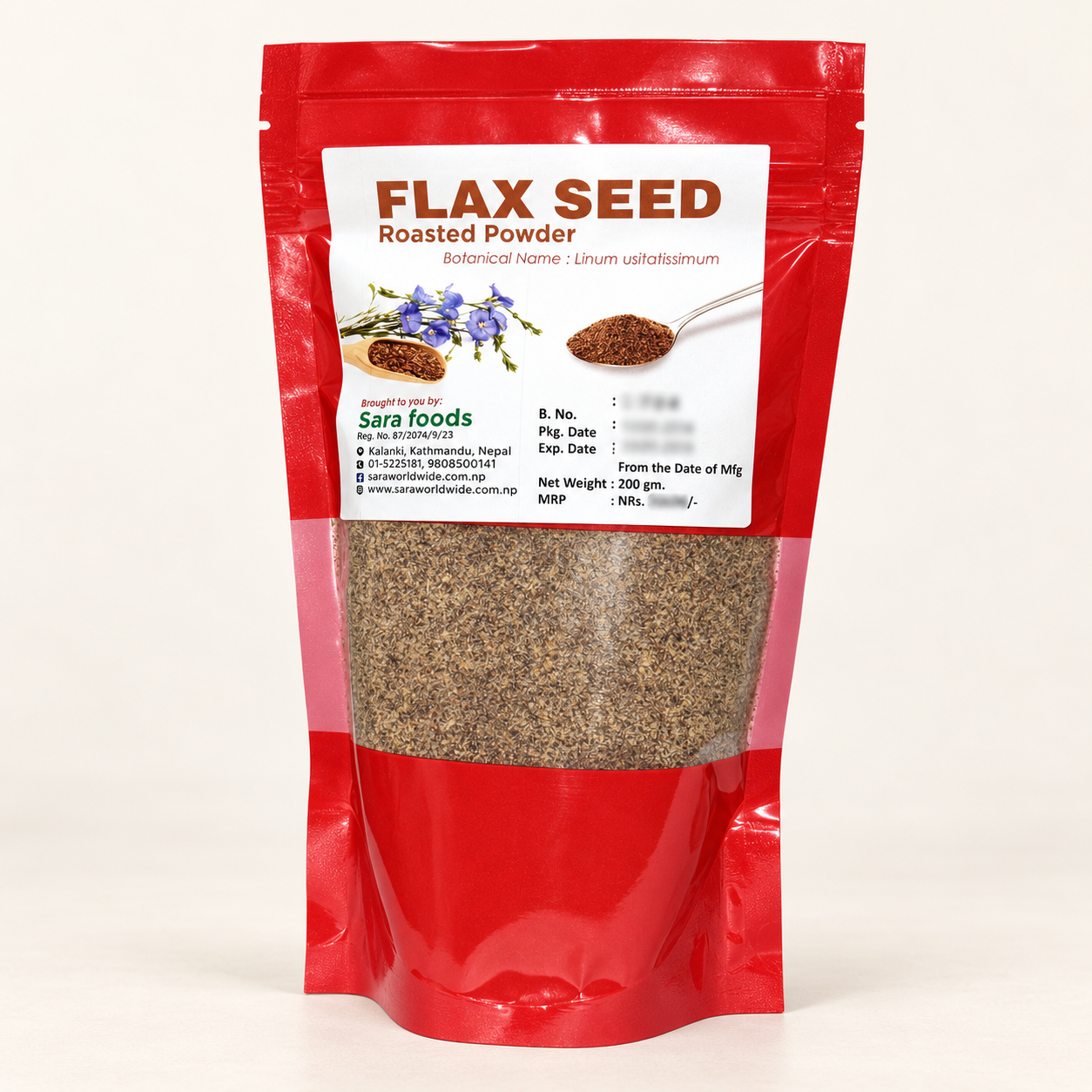
These are the live retail records checked on 17 November 2026. Availability and prices can change. The powder photograph currently shows an older 200 g-labelled pouch, while the selectable packs are 300 g, 600 g and 1 kg; choose by the live selector and confirm the delivered label.
What is roasted flaxseed powder?
Sara Foods Roasted Flaxseed Powder is flaxseed that has been roasted and ground. The current listing identifies the botanical name as Linum usitatissimum and describes a nutty-tasting ingredient for everyday recipes. Unlike the oil, the powder includes the ground seed material.
Practical ways to use the powder include stirring a small amount into oats, yoghurt or lassi, adding it to a smoothie, or mixing it into roti, bread or pancake batter. It can also be sprinkled over prepared food. Follow the current pack directions rather than treating a general internet recipe as a product instruction.
The powder is not a medicine and should not be marketed as a guaranteed weight-loss, cholesterol, diabetes or digestive treatment. The US National Center for Complementary and Integrative Health notes that evidence for many promoted flaxseed uses is limited or mixed, and it advises against eating raw or unripe flaxseeds. Sara’s listed powder is a roasted product, but buyers should still check the delivered label and use it as a food ingredient rather than a cure.
How the current powder packs compare
| Pack | Retail price | Approx. price per 100 g | Buying note |
|---|---|---|---|
| 300 g | Rs 550 | Rs 183.33 | Smaller pack for first-time or occasional household use |
| 600 g | Rs 950 | Rs 158.33 | Lower unit cost than the 300 g option |
| 1 kg | Rs 950 | Rs 95.00 | Currently the lowest listed unit cost; recheck the selector before payment |
The identical Rs 950 price currently shown for 600 g and 1 kg makes the 1 kg option appear much better value. Because catalogue data can be corrected or updated, confirm the selected variation and order summary before checkout.
What is flaxseed oil?
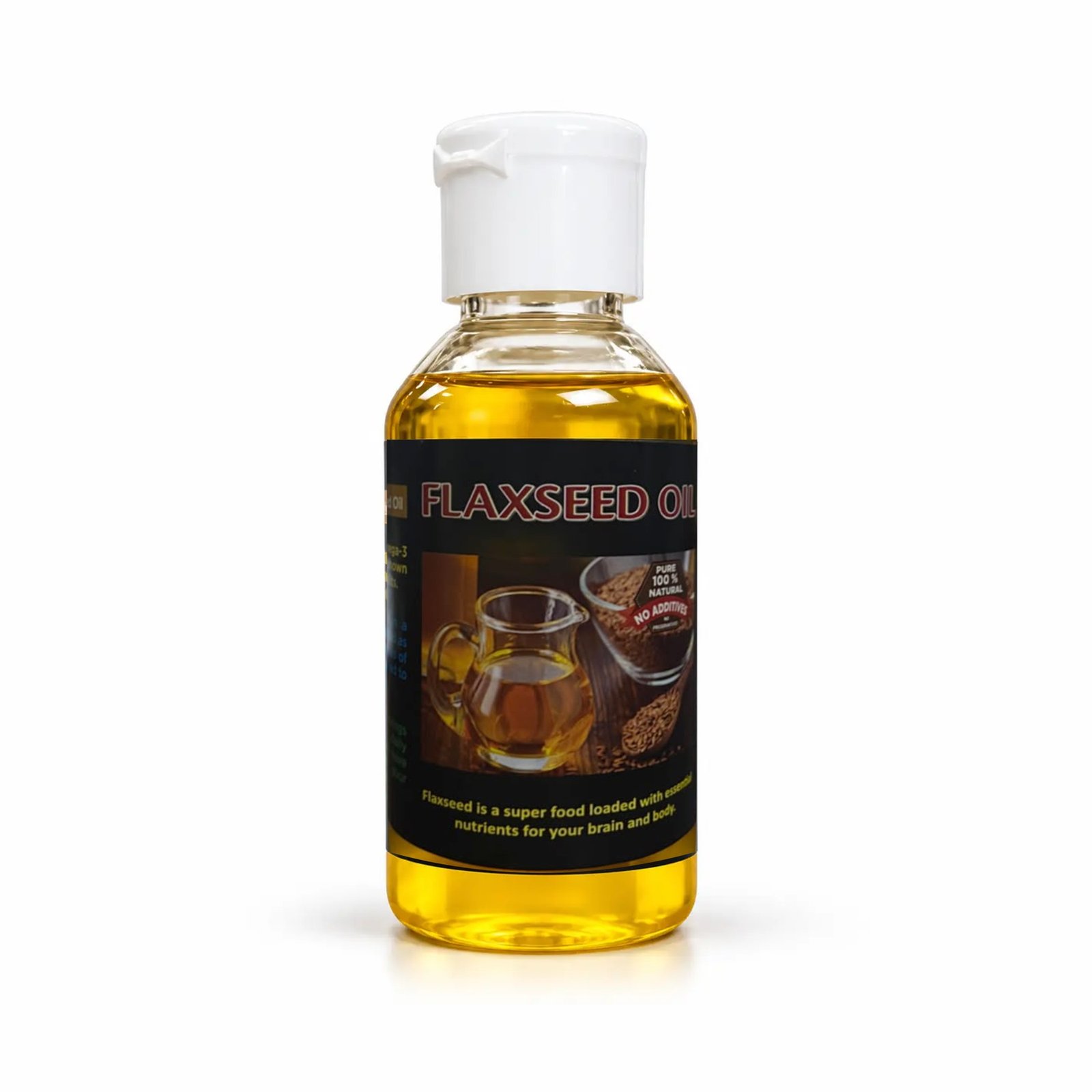
Flaxseed oil is the oil portion extracted from the seed. The current Sara listing describes a mild, nutty oil in 100 ml and 500 ml packs. For food use, it is positioned as a finishing oil for salads, smoothies, yoghurt or food that has cooled slightly—not as a high-heat frying oil. For hair or skin use, follow the physical bottle and introduce a small amount cautiously.
The US National Institutes of Health identifies flaxseed and flaxseed oil as plant sources of alpha-linolenic acid (ALA), an essential omega-3 fatty acid. It also explains that the body converts only a small amount of ALA into EPA and DHA. That distinction matters: a plant-source ALA product should not be presented as nutritionally identical to fish or algal sources of EPA and DHA.
How the oil packs compare
| Pack | Retail price | Price per 100 ml | Buying note |
|---|---|---|---|
| 100 ml | Rs 250 | Rs 250 | Useful when testing taste, freshness or personal-care suitability |
| 500 ml | Rs 1,050 | Rs 210 | Lower unit cost for regular use |
Seven checks before buying flaxseed products in Nepal
- Choose the format first: powder for the ground seed; oil for the extracted fat.
- Confirm the selected size: do not assume the photographed net weight is the size being added to the cart.
- Read the ingredient statement: confirm whether the pack contains one ingredient or a blend.
- Match the intended use: check whether the bottle or pouch supports food use, personal care or both.
- Inspect batch information: check the seal, packed date, best-before details, MRP and storage directions on delivery.
- Compare unit cost: calculate price per 100 g or 100 ml, not only the headline pack price.
- Avoid cure-all claims: food and cosmetic products do not diagnose or treat every health condition.
Storage and first-use guidance
Keep both products sealed, dry and away from direct light or heat, then follow the delivered label for any refrigeration instruction. Use a clean, dry spoon for powder and close the container promptly. For oil, avoid contaminating the bottle and stop using it if the smell or flavour becomes noticeably unpleasant.
If flaxseed is new to your diet, begin with a modest recipe amount rather than a large supplement-style dose. NCCIH notes that higher amounts may cause bloating, fullness or diarrhoea and that flaxseed products may interact with some medicines. People who are pregnant, breastfeeding, taking medication or managing a health condition should discuss supplement-style use with a qualified health professional.
Retail and wholesale enquiries
Household customers can compare the Roasted Flaxseed Powder, Flaxseed Oil, Superfood Powders, Natural Oils or the complete Shop.
Retailers, cafés, hospitality buyers and institutional customers can review Superfoods Wholesale in Nepal or use the Wholesale and Contact pages. Include the product format, required pack size, expected quantity, delivery location and required date. Wholesale pricing, minimum quantities and availability should be confirmed separately from the retail catalogue.
Frequently asked questions
Is flaxseed powder the same as flaxseed oil?
No. Powder contains the ground seed material, while oil is the extracted fat. They behave differently in recipes and should not be substituted measure-for-measure.
Which option is better for roti, oats or yoghurt?
Roasted flaxseed powder is the more practical recipe ingredient because it can be mixed or sprinkled into foods. Oil is better used as a small finishing oil according to its label.
Can I fry food in flaxseed oil?
The current Sara listing positions it as a finishing oil rather than a high-heat cooking oil. Add it to cold food or after cooked food has cooled slightly, following the bottle directions.
Why does the powder photo show 200 g?
The photograph shows an older 200 g-labelled pouch, but the current selectable packs are 300 g, 600 g and 1 kg. Choose by the live selector and verify the order summary.
Does flaxseed oil contain the same omega-3s as fish oil?
No. Flaxseed oil supplies ALA. Fish and many algal oils supply EPA and DHA; the body converts only a limited amount of ALA into those longer-chain forms.
Where can I find more Sara buying guides?
Visit the Sara Guides hub for Nepal-focused comparisons covering superfoods, oils, essential oils, puja products and wholesale sourcing.
This guide provides general buying and food-use information, not medical advice. Product records were checked on 17 November 2026 and may change.